Your Associates Aren't Emailing Client Files to Strangers. They're Pasting Them Into ChatGPT.
It's confidential client information moving through public model interfaces right now, without anyone's knowledge or consent...

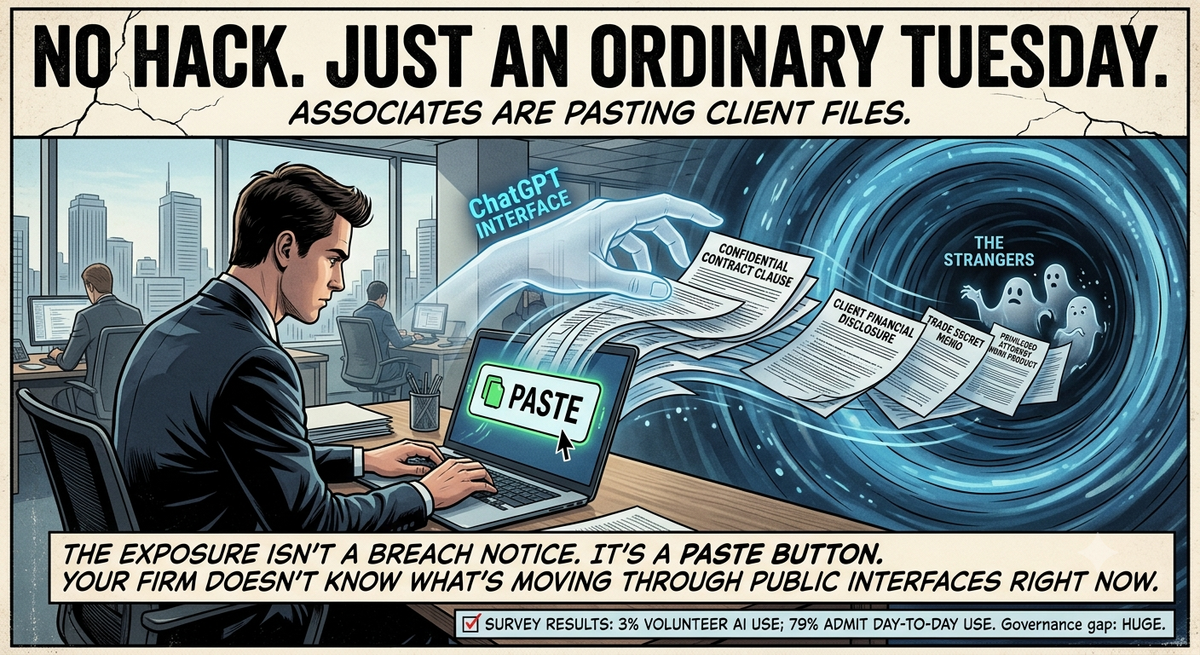
No hack. No breach notice. Just a junior associate, a deadline, and a paste button.
That's the actual shape of most law firm data exposure in 2026, not a sophisticated cyberattack, but an ordinary Tuesday afternoon.
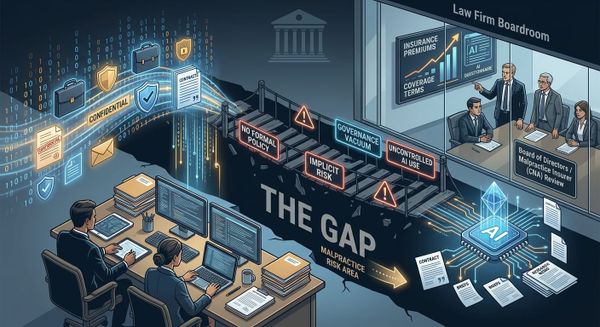
Here's the gap that should concern every managing partner: in a Thomson Reuters survey of 443 legal professionals, 62% said they were personally concerned about ChatGPT and generative AI in the workplace, including 80% of partners. Yet only 3% admitted to actually using generative AI tools at work. Separately, Clio's Legal Trends research found that 79% of legal professionals are using AI tools in their day-to-day work, while 44% of firms still have no formal AI governance policy in place.
Read those two data sets together and the picture is uncomfortable: most people at most firms are already using AI, most firms haven't built the guardrails to track how, and almost nobody is volunteering that information upward. That's not a hypothetical governance gap, it's confidential client information moving through public model interfaces right now, without anyone's knowledge or consent, including the client's.
The exposure isn't a dramatic data breach that triggers notification laws. It's a contract clause pasted into a free chat window to "clean up the language." It's a client's financial disclosures uploaded to help draft a memo. Individually, each instance looks harmless. In aggregate, across every associate in every practice group, it's an entire firm's confidentiality obligations resting on the judgment of people who were never trained on where the line is.
A ban you can't verify isn't a policy. It's a hope.
Does your firm actually know what's being pasted into public AI tools today, or just what the policy says should happen?