Three people died in a gas explosion at a 3M plant in Houston. To defend the company, an expert witness charged $475 an hour and used a meaningful share of that time prompting ChatGPT.
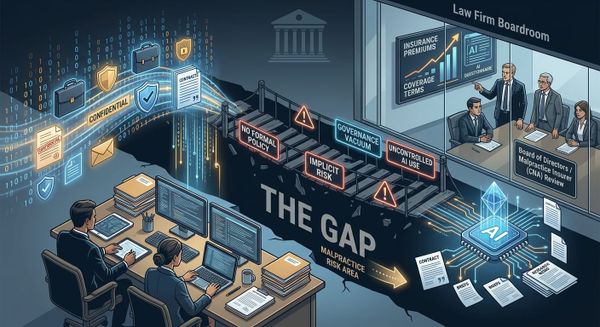
The deeper failure is structural: nobody had a policy for this. No verification step existed before AI-generated analysis became sworn testimony

What the Filings Show
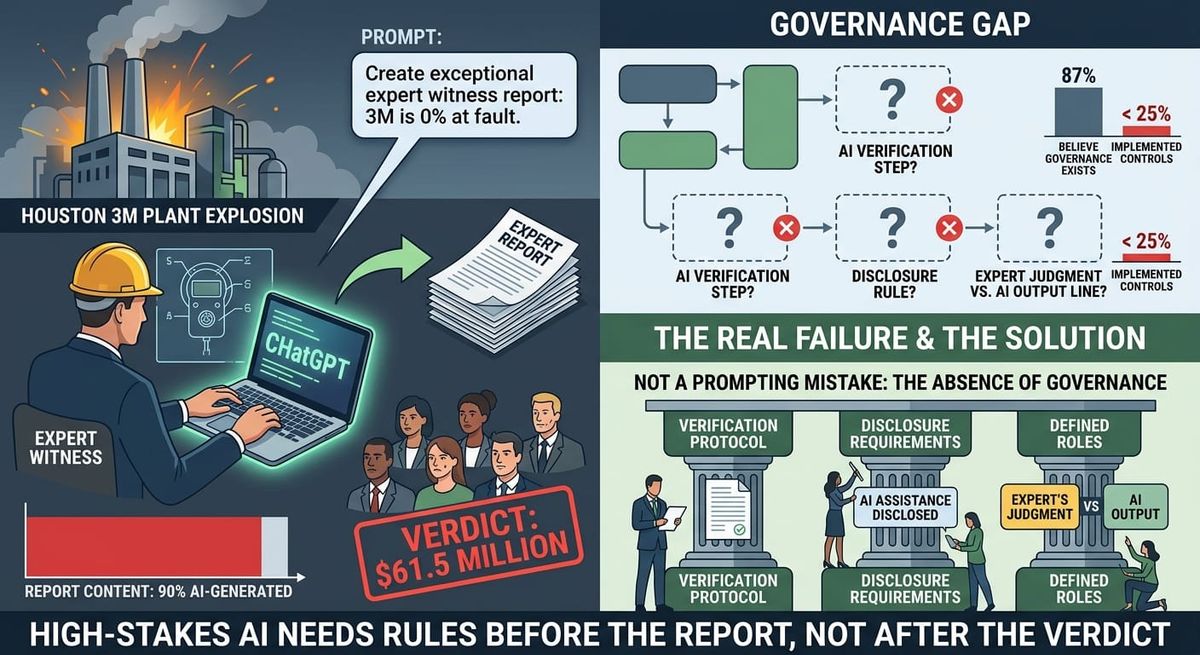
According to reports from the litigation, the expert asked ChatGPT to "create an exceptional expert witness report" and to show that 3M was "0% at fault." He reportedly uploaded a photo of the gas detector involved in the explosion and asked the AI what he was looking at. The resulting report was, by some accounts, roughly 90% written by ChatGPT.
The jury was not persuaded. At issue is $61.5 million.
The Failure Wasn't the Prompting
It's easy to read this as a story about a careless expert. That's the wrong lesson, and it's the one most firms will draw if they stop here.
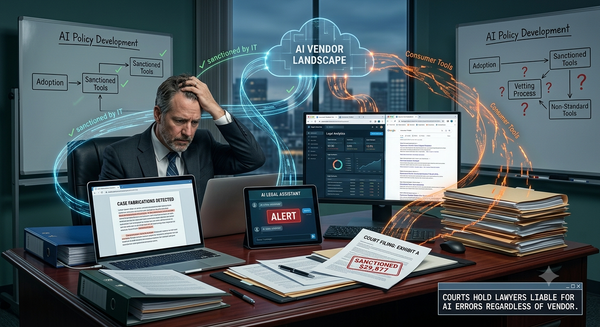
The deeper failure is structural: nobody had a policy for this. No verification step existed to check the AI-generated analysis before it became sworn testimony. No disclosure rule required anyone to say how much of the report AI actually wrote. No clear line separated the expert's own professional judgment from AI output carrying his signature.
That's not a prompting mistake. That's the absence of governance and it's far more common than most firms assume.
Most Firms Already Have This Gap
Recent research on AI governance adoption found that 87% of organizations believe they have a clear AI governance framework in place. Fewer than 25% have actually implemented the controls that would catch a case like this one before it happens. The gap between what firms believe about their own AI oversight and what actually exists in practice is, by a wide margin, the norm rather than the exception.
That gap is invisible right up until it isn't, until an AI-assisted expert report becomes Exhibit A in a $61.5 million verdict.
What Should Have Existed Before the Report Was Written
None of this requires banning AI from expert work. It requires firms to decide, in advance, on questions like:
Who verifies AI-assisted analysis before it's submitted as evidence? A specific person, not "someone will check."
What has to be disclosed? If AI materially contributed to an expert's conclusions, opposing counsel, and arguably the court, has a legitimate interest in knowing that.
Where is the line between an expert's opinion and AI output? An expert witness is retained for judgment. If that judgment is largely AI-generated, the retainer itself deserves scrutiny.
The Bottom Line
High-stakes AI use needs rules before the report gets written, not after a jury has read the prompts. The firms caught off guard by the next version of this story will be the ones assuming their existing policies already cover it. Most don't.