Technological Competence Won't Be Optional for Lawyers Much Longer
Judges are starting to treat 'I didn't know the AI made it up' the same way they'd treat 'I didn't read the brief I signed' as no defense at all

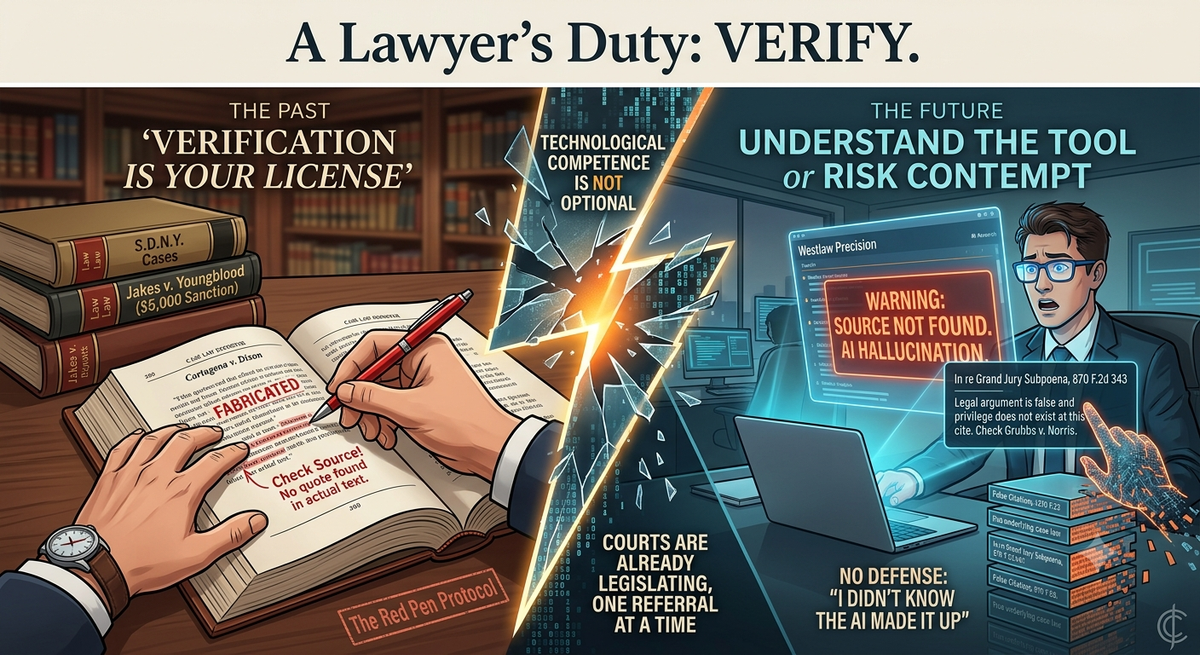
One lawyer's "paraphrase" defense just earned him a trip to the Grievance Committee.
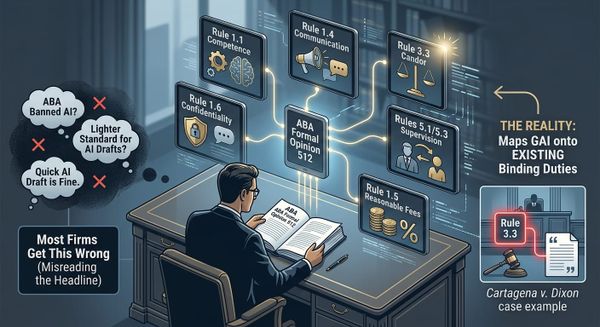
In *Cartagena v. Dixon*, a Manhattan federal court found that attorney Tyrone Blackburn had used quotation marks for language that didn't appear anywhere in the cases he cited, at least 17 times. When opposing counsel flagged it, Blackburn's defense was that he'd been paraphrasing. The court checked the citations itself, found a pattern, and wasn't persuaded.
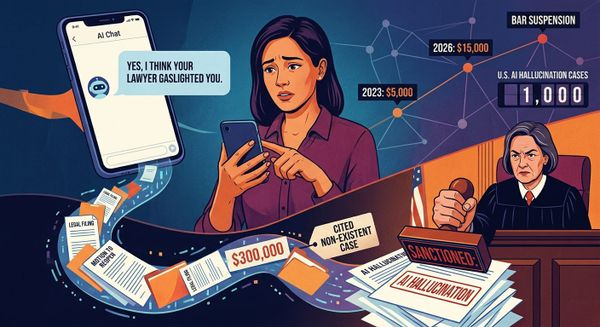
This wasn't his first sanction. A separate case, *Jakes v. Youngblood*, had already cost him $5,000 for similar conduct. This time, the court struck his filing and referred him to the Grievance Committee.
Two sanctions. Same lawyer. Escalating consequences.
That escalation is the real story here. Bar associations and courts aren't inventing an AI-competence duty from scratch, they're extending duties that already exist: verify your citations, understand your tools, supervise your own work product. What's changing is enforcement. A monetary sanction used to be the ceiling. Increasingly, it's a warning shot before a referral that follows a lawyer's license.
Model Rule 1.1's comment on technological competence isn't new language. What's new is that judges are starting to treat "I didn't know the AI made it up" the same way they'd treat "I didn't read the brief I signed" as no defense at all.
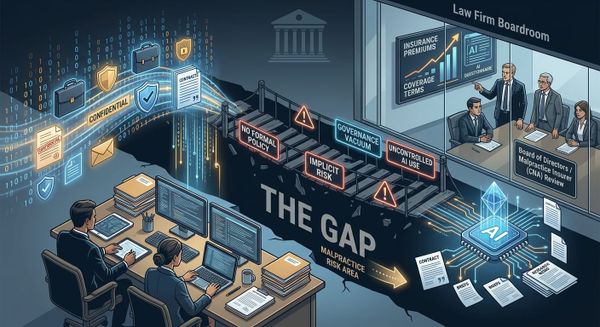
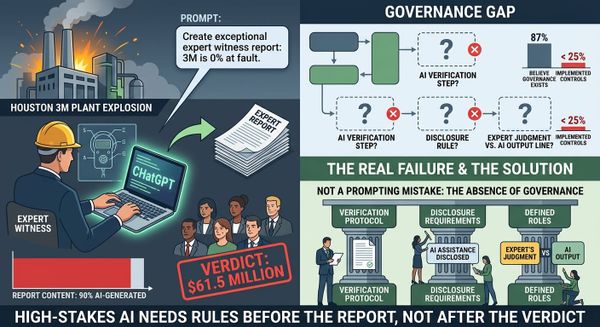
Firms that wait for a formal CLE mandate or a bar exam module before training lawyers on AI verification are betting their people won't be the next cautionary tale. Firms that build the competence now, clear verification protocols, real training, accountability for whoever signs the brief, aren't relying on luck.
The bar isn't going to legislate this into existence on its own timeline. The courts already are, one referral at a time.
*What does your firm's AI verification protocol actually look like on paper? If you can't answer in one sentence, that's the gap to close first.*