One Filing. One Fabricated Case. One Career-Ending Sanction.
The filing was struck. The lawyer was referred to the disciplinary committee. That's a career problem, not a technology problem.


A single fabricated quote doesn't stay a single mistake. It compounds.
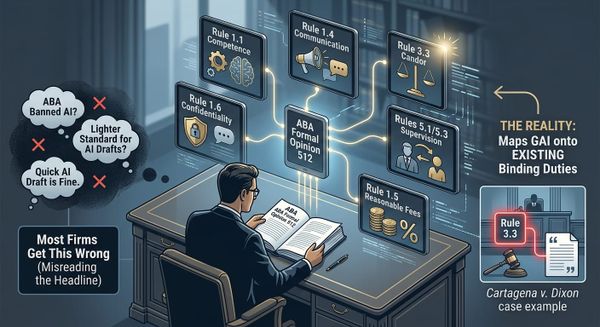
On July 10, 2026, a federal magistrate in the Southern District of New York struck an attorney's filing after finding he had put quotation marks around language that simply wasn't in the cases he cited, at least 17 times. His defense: it was “paraphrase.” The court checked the record itself and disagreed.
Here's the part that matters: this wasn't his first time. He had already been sanctioned $5,000 for similar conduct in an earlier case. This time, the court didn't just strike the filing, it referred him to the Attorney Grievance Committee. (Cartagena v. Dixon, Blackburn, and T.A. Blackburn Law, per the Charlotin AI Hallucination Cases Database.)
He's not an outlier. In Oregon, one set of briefs carried 15 fabricated cases and 8 fake quotations across three filings, over $100,000 in combined sanctions and fees before the underlying case was even resolved on the merits. In a Texas bankruptcy court this month, fabricated citations cost one attorney $29,877, a civil contempt finding, and a mandatory CLE course on generative AI.
Local rules are catching up fast. Some courts now charge per infraction, $500 per fabricated citation, $1,000 per fabricated quote, turning what used to be a judge's discretionary slap into a predictable, compounding bill.
The lesson isn't “don't use AI.” It's that unverified AI output in a court filing is no longer a private mistake between you and a search box. It's a public record, reviewed by a judge, that can trigger monetary sanctions, contempt findings, and a bar referral that follows you for the rest of your career.
Every citation an AI tool hands you is a claim, not a fact, until you've opened the case yourself.
What's your firm's verification protocol before a brief gets filed?