He Didn't Know His Own Team Was Using AI. The Court Held Him to the Standard Anyway.
The duty of technological competence requires knowing what your own people are putting in front of a judge, under your signature

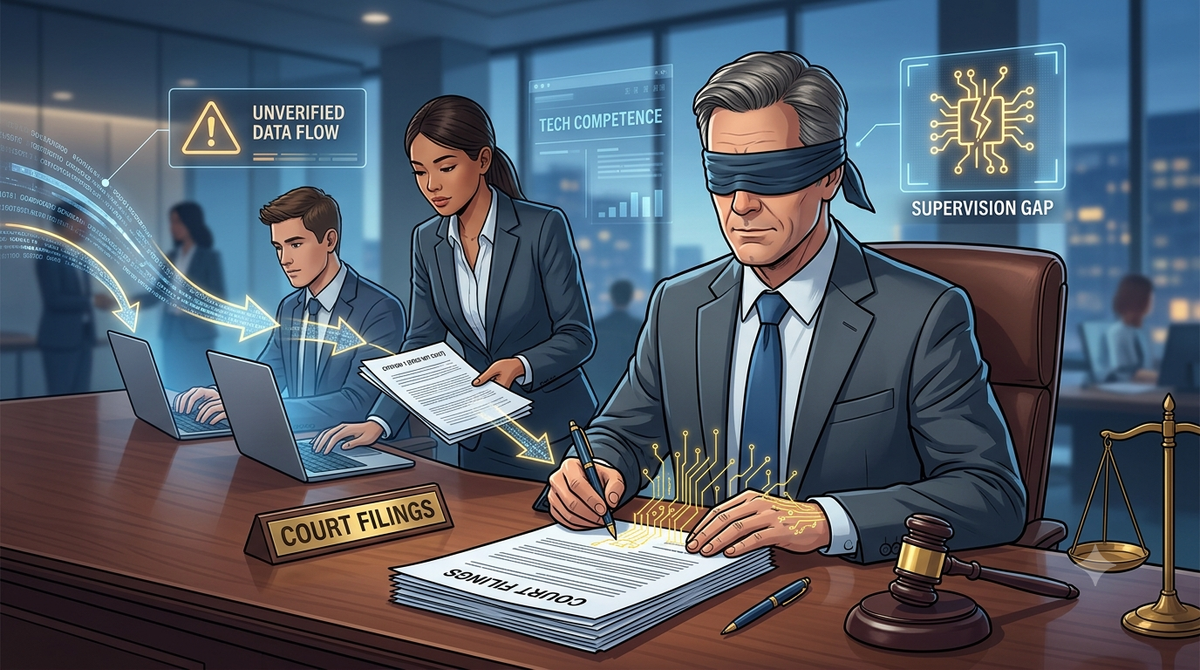
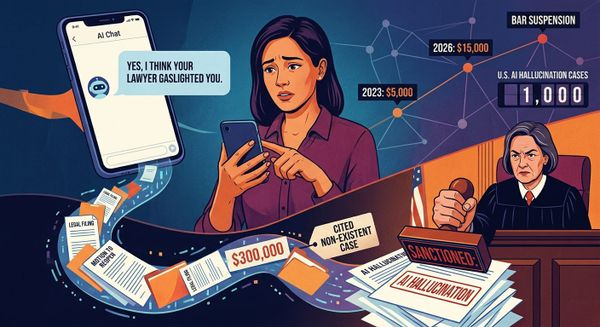
In February 2024, a Massachusetts Superior Court judge sanctioned an experienced plaintiff's attorney $2,000 in Smith v. Farwell after two oppositions his office filed turned out to rely on four case citations that don't exist in any reporter.
He hadn't drafted them himself. An associate and two recent law school graduates not yet admitted to the bar had written the oppositions, using an AI tool the supervising attorney says he didn't know about and wasn't especially familiar with in the first place. When Judge Brian Davis asked what happened, the answer was that straightforward: he hadn't known AI was involved.
Judge Davis found that credible. He called the resulting $2,000 penalty "mild" given how serious the underlying conduct was. He sanctioned him anyway.
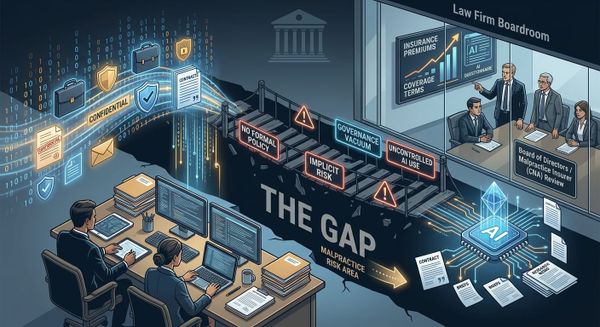
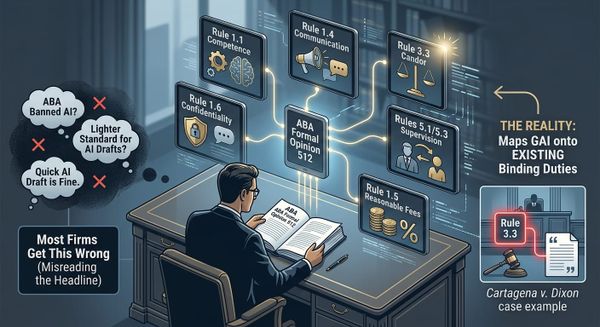
That last detail is the one worth sitting with if your firm's AI policy currently lives in a "trust the associates" folder somewhere. The duty of technological competence, under Model Rule 1.1 and its 2012 comment on keeping abreast of the benefits and risks of relevant technology, doesn't require a lawyer to personally understand how a large language model works. It requires knowing what your own people are putting in front of a judge, under your signature. Those are two different obligations, and Smith v. Farwell is what it looks like when a lawyer satisfies neither.
Most firms' technology-competence training, where it exists at all, still points at the newest associates: don't let ChatGPT write your brief, always pull the case yourself on Westlaw. That guidance is necessary. It's also aimed at the wrong end of the org chart in cases like this one. The Farwell attorney wasn't the person who opened the AI tool. He was the person whose name went on filings he hadn't fully vetted, built by junior staff using something he'd never asked about.
The ABA Journal has reported on a related pattern worth naming here: younger lawyers show up disproportionately in these sanctions dockets, not necessarily because they're less careful, but because they're operating with less senior oversight layered on top of their work, the exact gap this case exposes from the other direction.
Class rank and law school pedigree function, informally, as a kind of insurance policy firms buy into: hire well enough, the thinking goes, and the work checks itself. Smith v. Farwell is a reminder that verification is a workflow habit, not a trait some associates are born with and others aren't. A less-credentialed associate who double-checks every citation outperforms a top-of-class one operating inside a firm with no citation-review requirement, every time this scenario repeats. And it keeps repeating, across firms of every size and pedigree mix.
The mitigating detail that earned this attorney a "mild" sanction rather than a harsher one won't hold twice. The technology isn't new enough anymore for "I didn't know my own staff was using it" to read as reasonable diligence instead of a supervision gap with a name on it.
If someone on your team filed something with a fabricated citation tomorrow, would you find out from them, or from the judge?