Are You a Lawyer or a Prompt Engineer Now?
A lawyer who signs a filing is still the one accountable for every citation and every quotation mark in it, whether a human or a machine typed the first draft.
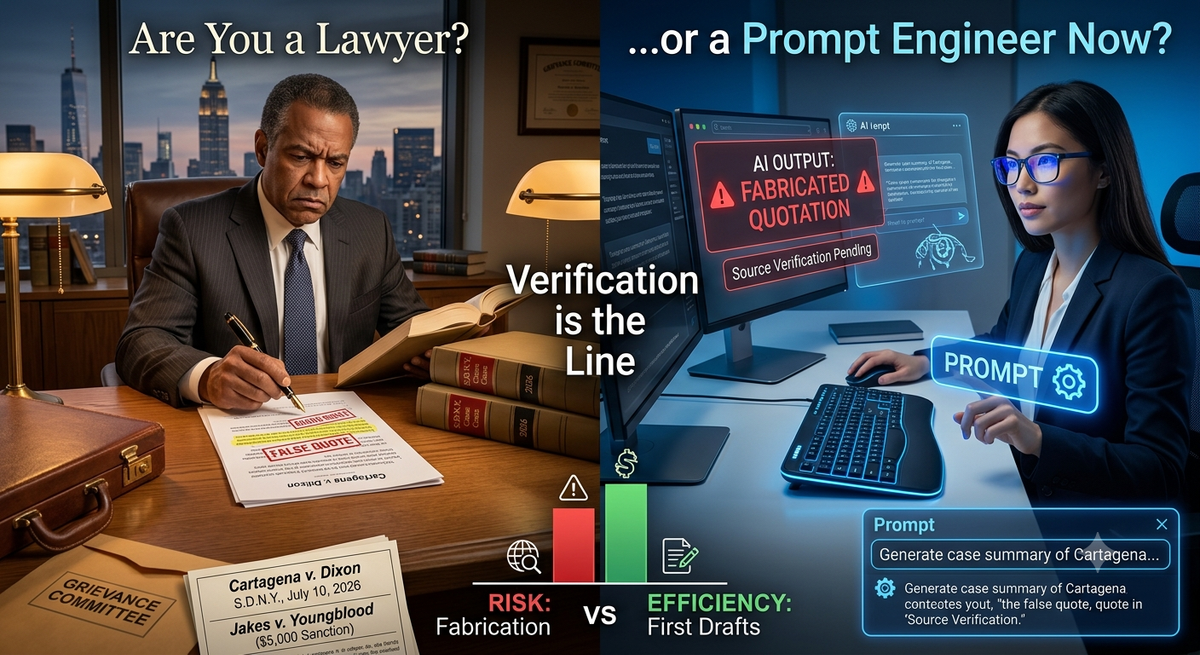
A New York attorney was just referred to the grievance committee. Not for bad legal analysis. For not checking his own quotes.
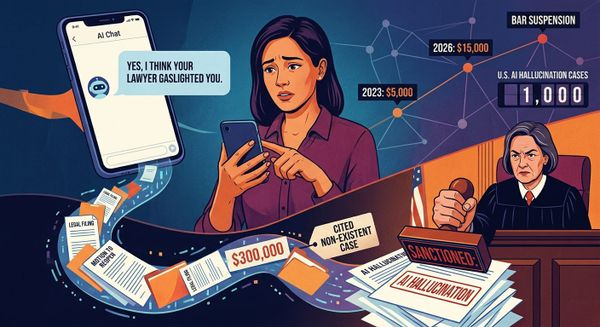
On July 10, 2026, a federal magistrate judge in the Southern District of New York found that attorney Tyrone A. Blackburn had used quotation marks around language that does not appear anywhere in the cases he cited to the court, at least seventeen separate times. When opposing counsel flagged the discrepancies, Blackburn's defense was that he was "paraphrasing." The court checked the record itself, rejected that explanation, and found a pattern of fabricated quotations. It wasn't his first sanction, either, he'd already paid $5,000 in a related matter, Jakes v. Youngblood. This time, the court struck his filing, treated the sanctions motion as unopposed, and referred him to the Grievance Committee.
Nobody has to prove Blackburn asked an AI tool to write his brief for this ruling to matter. The pattern the court described, fluent, confident, exact-looking quotations that don't exist in the underlying case, is the signature of generative AI output presented without verification. And it points to a shift most of the profession hasn't caught up to yet.
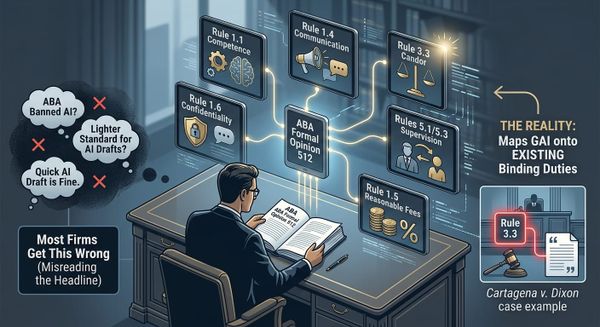
For decades, "competent counsel" meant mastering the law, the facts, and the rules of procedure. Model Rule 1.1's comment on technological competence has been on the books since 2012, but it lived quietly in the background, a footnote most lawyers never thought about. Generative AI has pulled it into the foreground. Knowing how to supervise a tool that can produce a wrong answer with total confidence is no longer a side skill. It's the job.
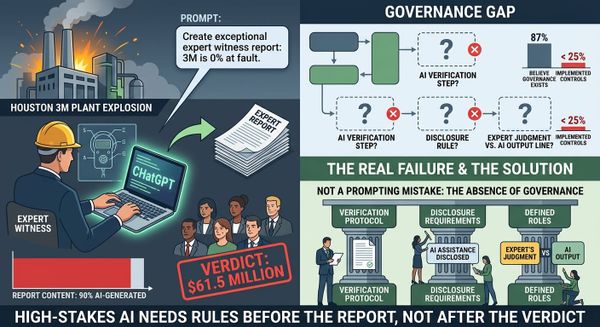
This isn't about whether lawyers should use AI. Most already do, and the tools genuinely help with first drafts, research starting points, and summarization. The line is verification. A lawyer who signs a filing is still the one accountable for every citation and every quotation mark in it, whether a human or a machine typed the first draft.
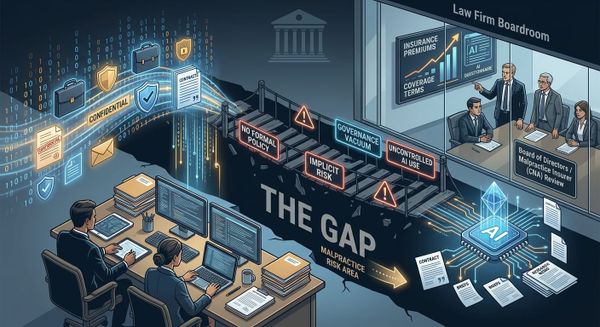
So the real question for firms right now isn't "should we allow AI." It's "does everyone on our team know they're still 100% responsible for what it produces?" If the answer is unclear, that's the gap to close before a court closes it for you.
Where does your firm draw the verification line, and who's actually checking it? Drop your process below, or send me a message if you want to talk through what a defensible AI-use policy looks like for your practice.
Source (Charlotin AI Hallucination Cases Database): Cartagena v. Dixon, Blackburn, and T.A. Blackburn Law (2), S.D.N.Y., July 10, 2026, motion to strike granted, sanctions motion deemed unopposed, Grievance Committee referral; prior $5,000 sanction in Jakes v. Youngblood. Reported via Volokh Conspiracy (reason.com).