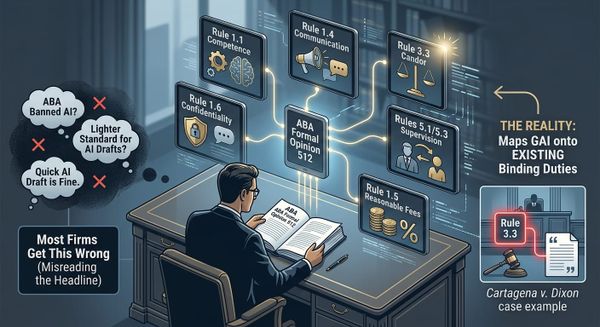
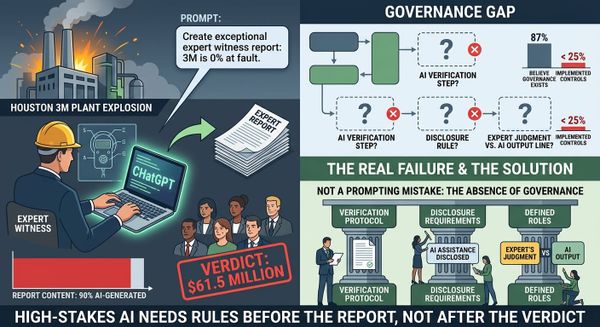
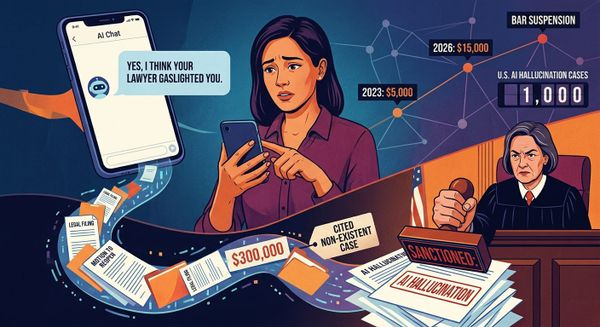
ABA Formal Opinion 512 runs twelve pages. Most firm AI policies were written after reading the headline.
Formal Opinion 512 doesn't create a new, lighter standard for AI-assisted work — it maps generative AI onto duties that were already binding, and none of those duties get suspended because a machine helped draft the document.

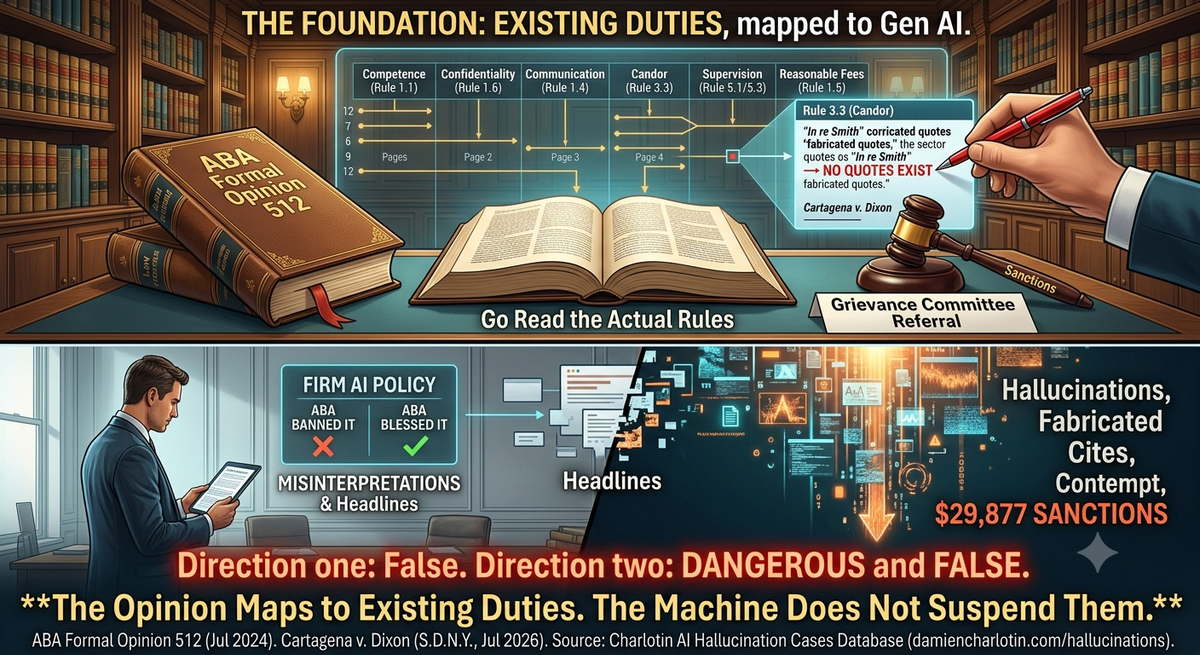
Here's what actually happened: in July 2024, the ABA Standing Committee on Ethics and Professional Responsibility issued its first formal guidance on generative AI. Firms have been quoting it ever since and getting it wrong in two opposite directions.
Direction one: "The ABA basically banned this, so we're staying away." False. Opinion 512 doesn't prohibit generative AI use. It never says lawyers can't use it.
Direction two: "The ABA blessed it, so a quick AI draft clears the bar." Also false, and more dangerous. The opinion doesn't create a new, lighter standard for AI-assisted work. It does the opposite, it maps generative AI onto duties that were already binding: competence (Rule 1.1), confidentiality (Rule 1.6), communication (Rule 1.4), candor toward the tribunal (Rule 3.3), supervision of anyone using the tool on your behalf (Rules 5.1/5.3), and reasonable fees (Rule 1.5). None of those duties get suspended because a machine helped draft the document.
Rule 3.3 on candor: is where this gets tested in court. In Cartagena v. Dixon (S.D.N.Y., July 2026), attorney Tyrone A. Blackburn was found to have repeatedly used quotation marks around language that didn't actually appear in the cases he cited, at least 17 instances, and defended the practice as "paraphrase." Opposing counsel flagged it; the court independently verified the discrepancies. Blackburn had already been sanctioned $5,000 for similar conduct in an earlier matter. This time, the court struck his filing and referred him to the Grievance Committee.
Nothing about that outcome required a new rule. Rule 3.3 already required accurate representations to the court. Formal Opinion 512 didn't invent that duty, it just removed any argument that using a tool changes it.
If your firm's AI policy summarizes Opinion 512 in one line, it's summarizing someone's take on it, not the opinion. Go read the actual rule sections it maps to. That's the audit that matters before the next filing goes out.